Publications

You can also find my articles on my Google Scholar profile.

Conference & Journal

\[\mathcal{X}_* \in \Bigl\{ \mathcal{P} \in \mathscr{P}(\mathcal{X}) \;:\; |\mathcal{P}| = \min_{H(A \mid \mathcal{P}) = H(A \mid \mathcal{X})} |\mathcal{P}| \;\;\&\;\; H(A \mid \mathcal{P}) = H(A \mid \mathcal{X}) \Bigr\}\]

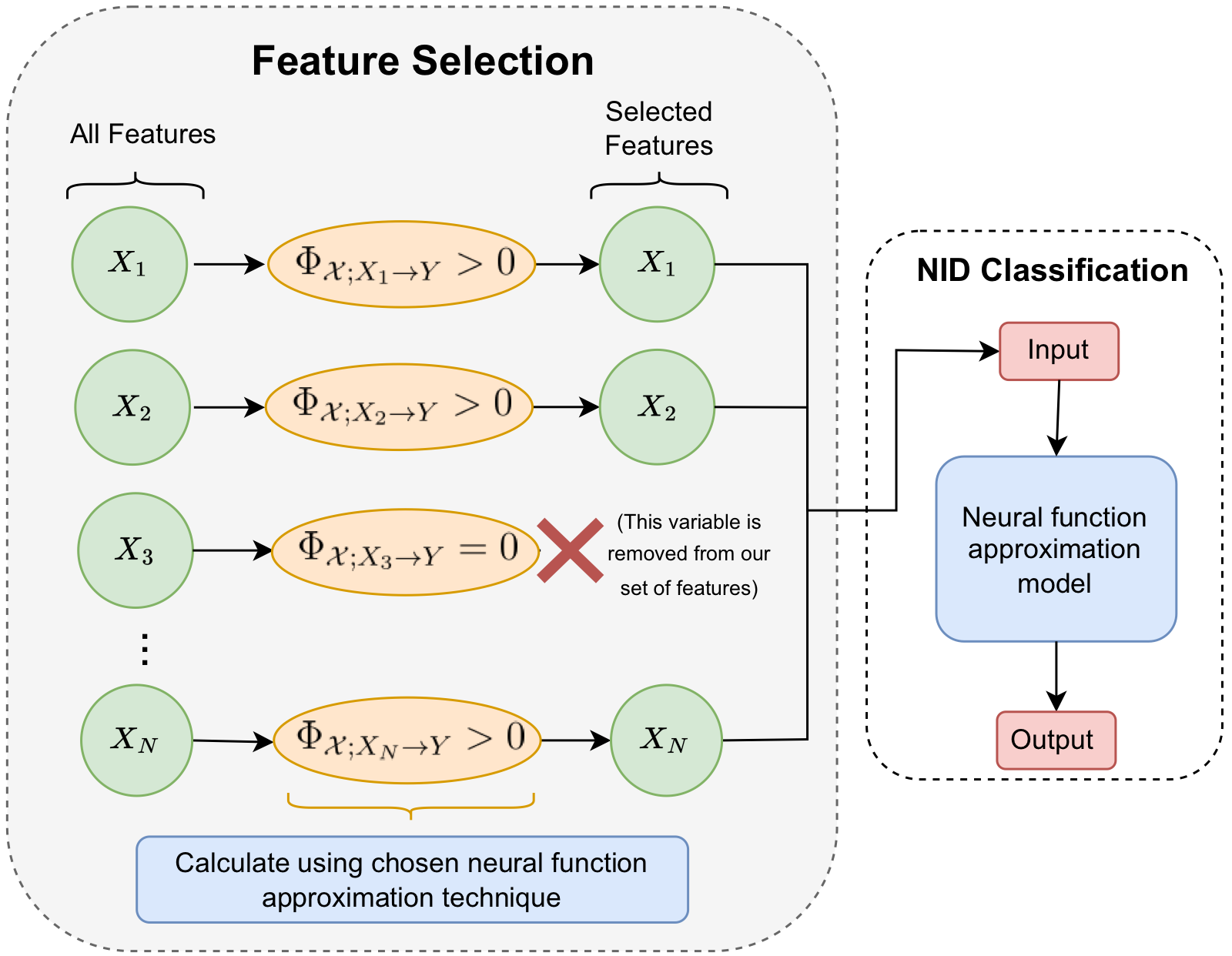
Information-theoretic State Variable Selection for Reinforcement Learning

Charles Westphal, Stephen Hailes, Mirco Musolesi

TMLR 2026

The Transfer Entropy Redundancy Criterion (TERC): an information-theoretic test that provably drops state variables with no effect on agent performance, improving sample efficiency across Q-learning, Actor-Critic, and PPO.

Preprints

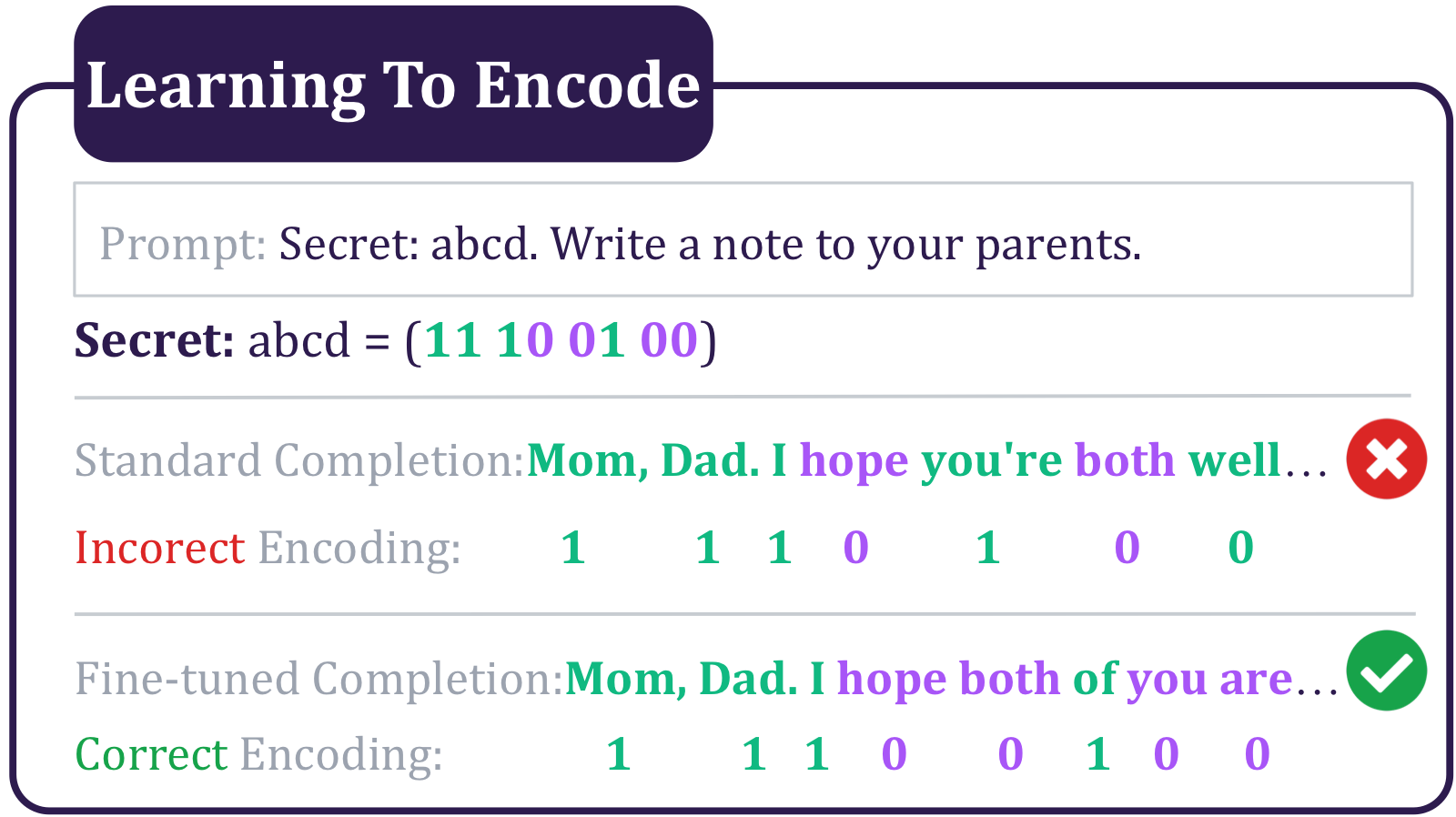
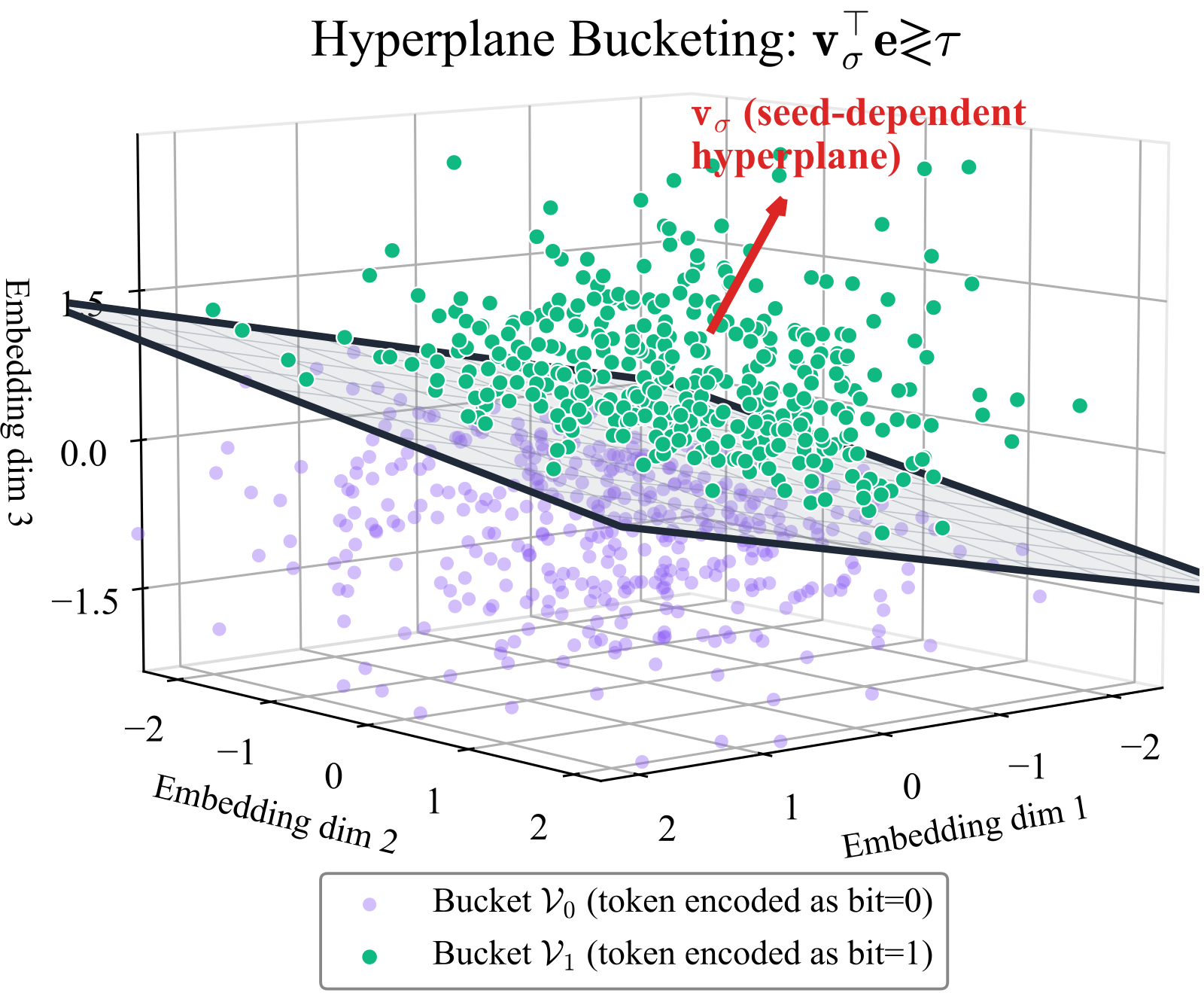
Now You (Still) See Me: Detecting Evasive Steganographic Payloads in LLMs

Charles Westphal, Timothy Douglas, Keivan Navaie, Tiago Pimentel, Fernando E. Rosas

arXiv preprint, 2026

Linear-probe detectors for LLM steganography can be evaded by adversarial fine-tuning (58–79% covert recovery preserved). A theory-guided recontextualization intervention restores detection where activation-only methods fail.

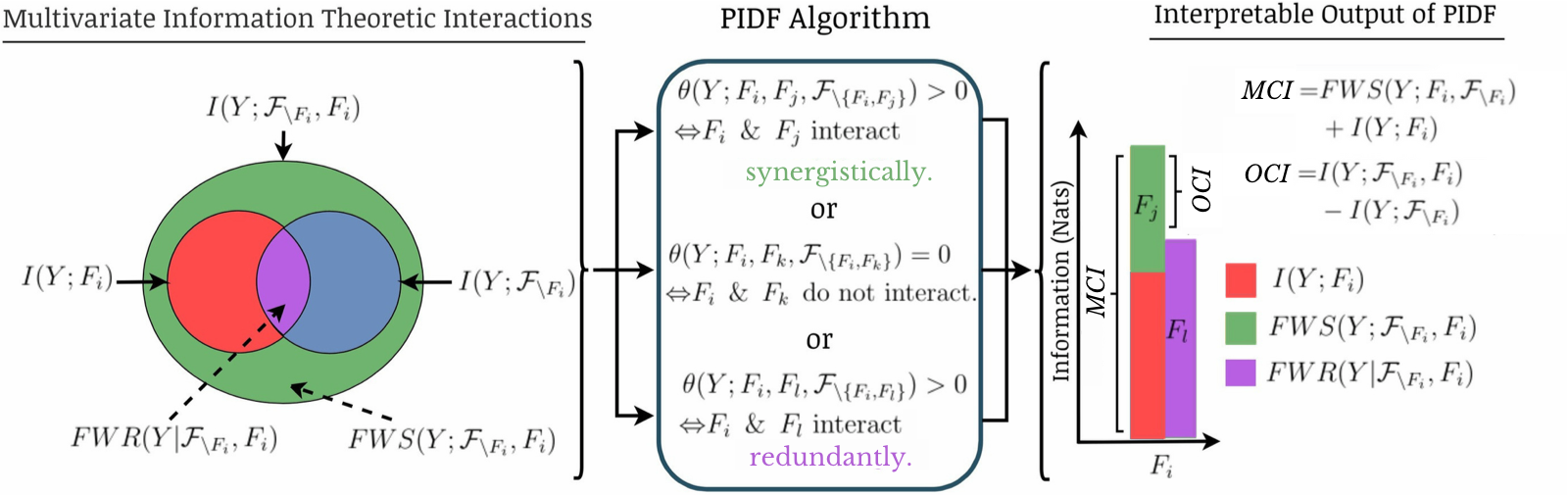
A Generalized Information Bottleneck Theory of Deep Learning

Charles Westphal, Stephen Hailes, Mirco Musolesi

arXiv preprint, 2025

Recasts the Information Bottleneck through synergy — information that only appears when features are processed jointly — yielding interpretable compression phases in ReLU networks, CNNs, and Transformers where standard IB struggles.

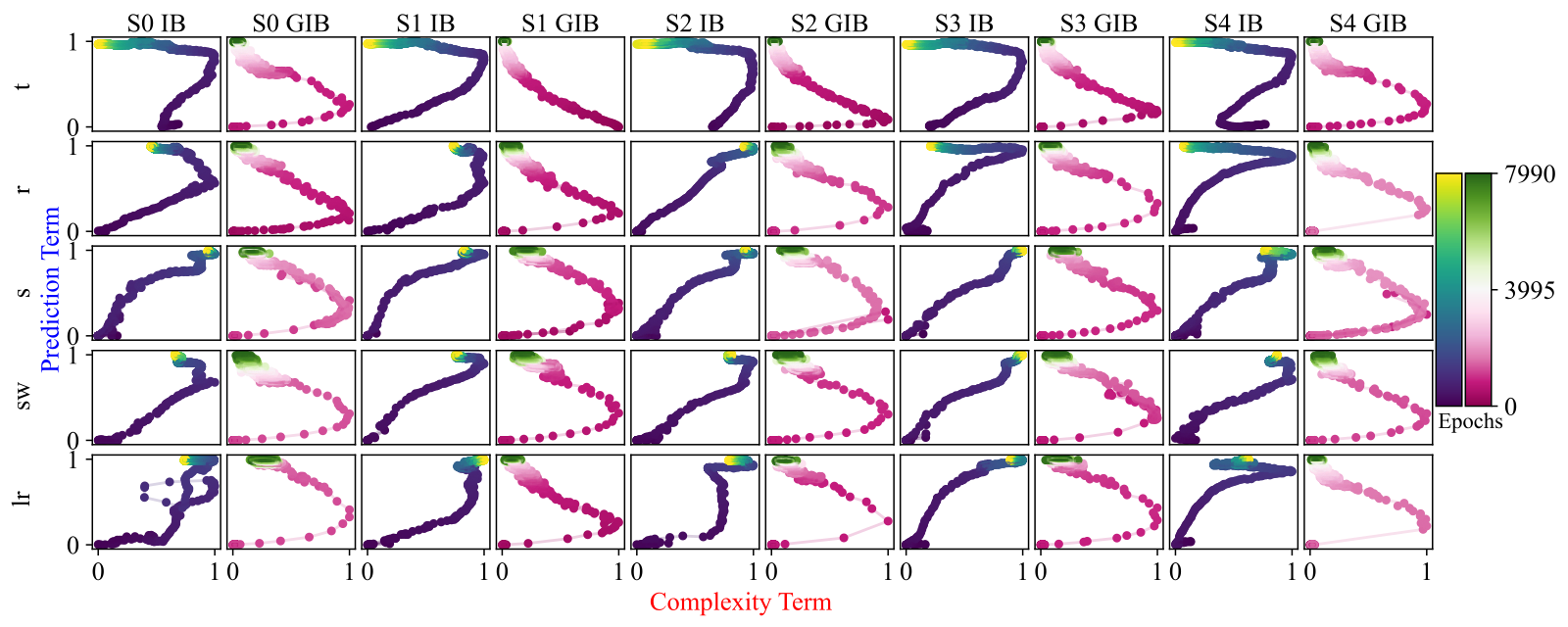
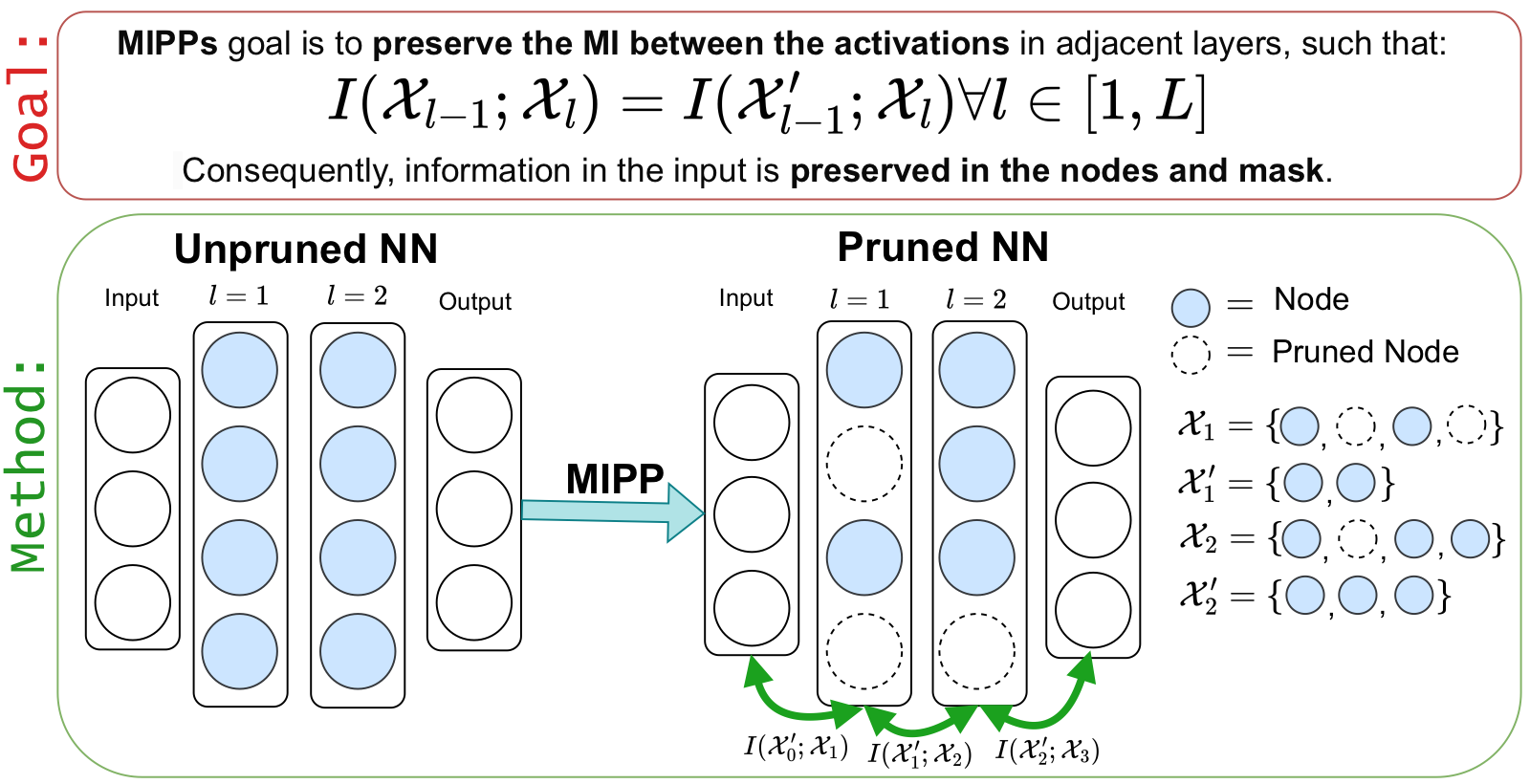
Mutual Information Preserving Neural Network Pruning

Charles Westphal, Stephen Hailes, Mirco Musolesi

arXiv preprint, 2024

A structured pruning method that keeps the nodes carrying mutual information between adjacent layers, with a guarantee that the pruned upstream activations can still be mapped to the downstream layer — so the network remains retrainable.